A role definition rather than a job title. Organizations adopting agentic systems keep discovering they need someone to do a particular kind of work, and keep giving that work to whoever is nearest: an automation lead, a product manager, an engineer who is good with prompts. The results are uneven because the responsibility has never been stated.
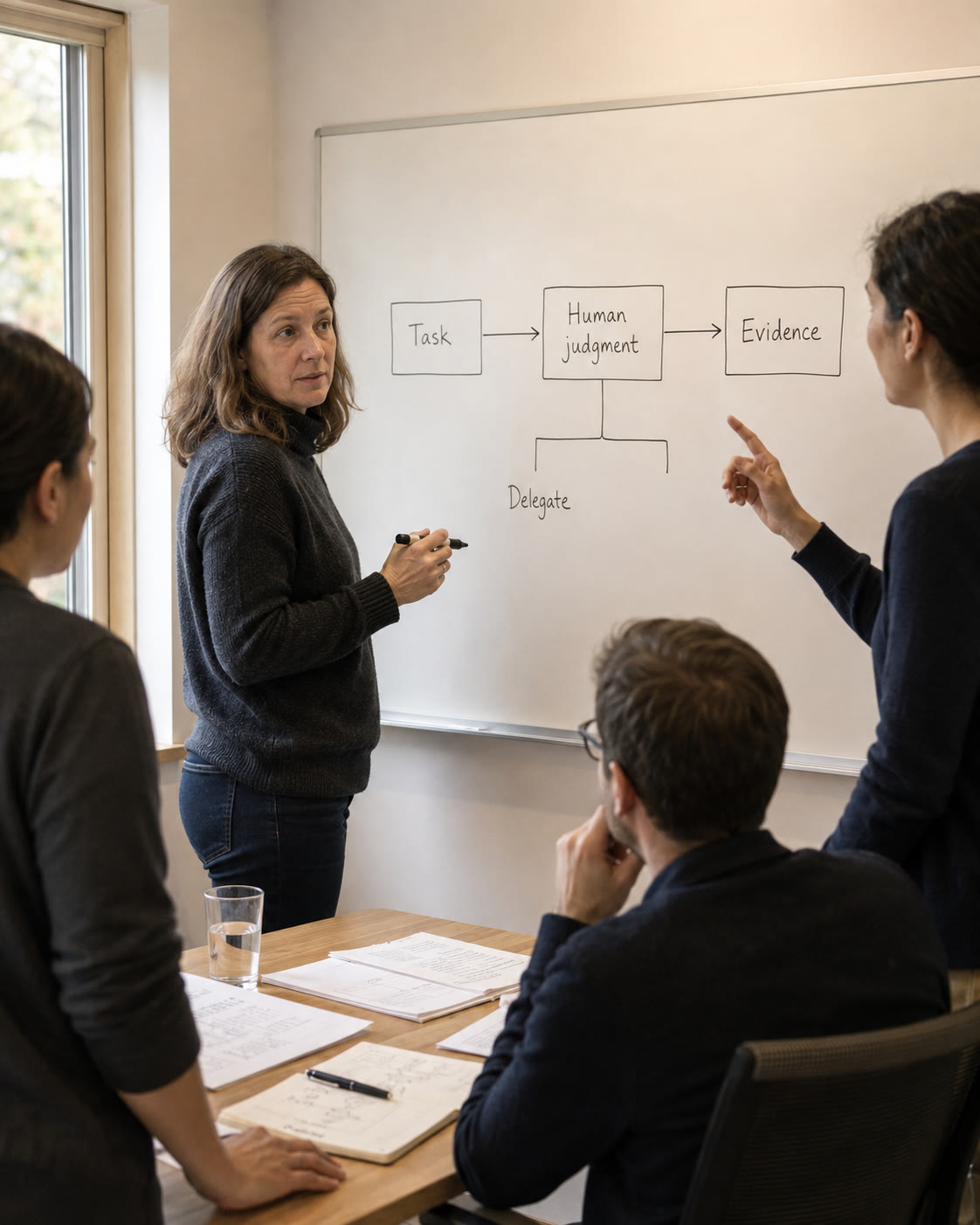
Produces a composition of the task that others can inspect and contest, rather than an intuition about what could be automated.
Decides which decisions require a person, and can say why. This is a standing responsibility, not a one-time architecture choice.
Accountability does not transfer to the system. The supervisor is the person who can explain how an outcome was produced and defend it afterwards.
Ensures the composition produces evidence, so performance can be assessed rather than asserted.
The unit of work is the composition, not the model.
The lab teaches this as a course for practitioners, taught first by Sravan Ankaraju and later by others. Participants work on real tasks from their own organizations and leave with completed Work Composition canvases rather than a certificate of attendance.