A description you can disagree with
is worth more than a diagram everyone nods at.
It asks what a task is actually made of: the decisions inside it, the judgment each decision requires, the evidence it produces, and which parts can be delegated to a machine without losing the ability to answer for the outcome.

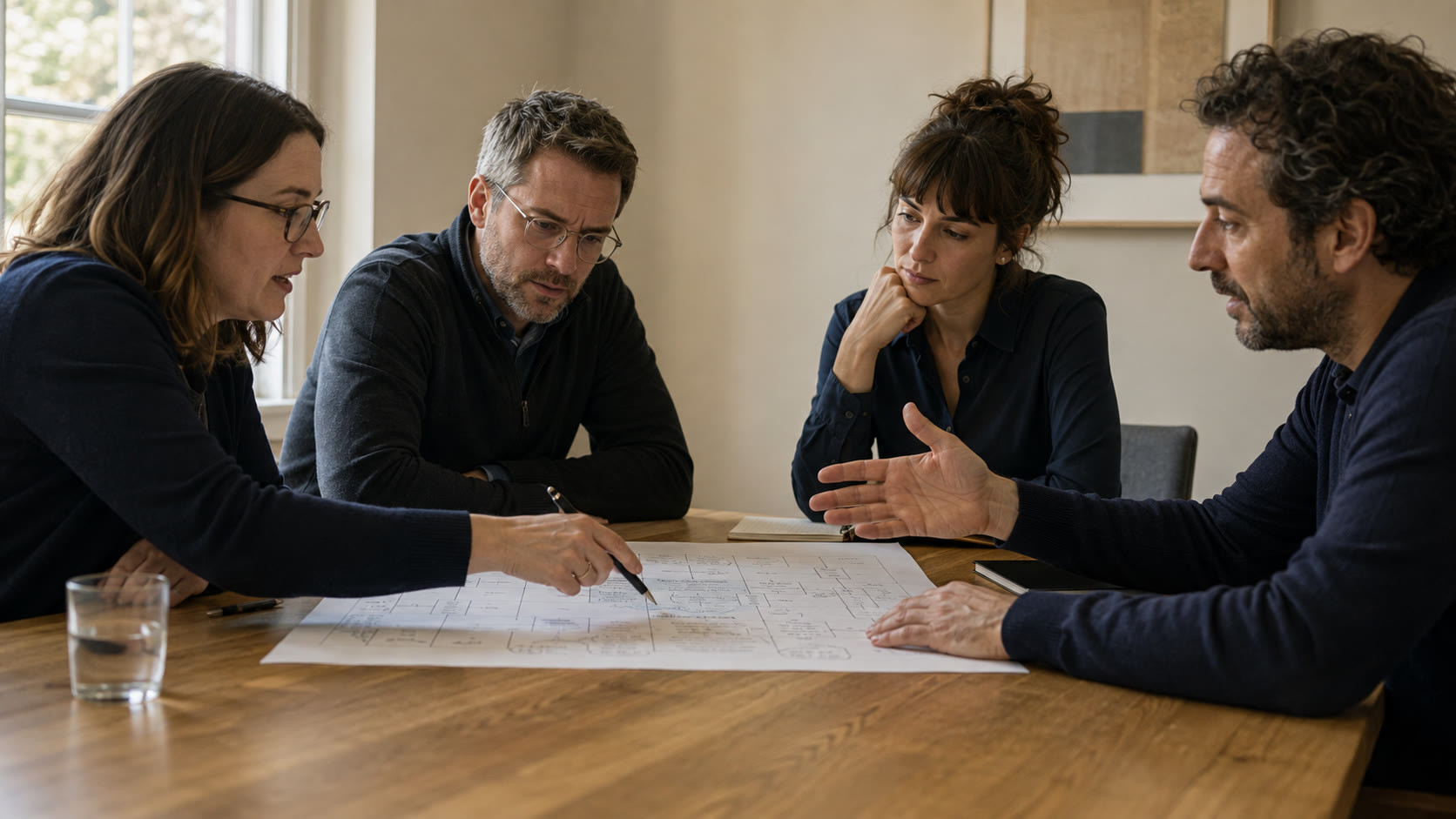
The canvas is the working surface of the method. A team fills it in for a piece of real work and comes away with a description precise enough to argue about: where the judgment sits, what evidence would show the work was done well, and which parts are candidates for delegation.
It is designed to be filled in on paper. Its fields are also specified as structured data, so a completed canvas can be held in a system rather than a drawer, and so descriptions across an organization can be compared rather than merely collected.
A description you can disagree with
is worth more than a diagram everyone nods at.
It exists because organizing has to come before mechanizing, and organizing needs a vocabulary. Process maps describe sequence. Job descriptions describe people. Neither describes composition, which is the thing that changes when agents enter the work.
A description language is only useful if it is shared, and a method that requires a licence is not a language. Work Composition is published under CC BY-SA 4.0. Anyone may use, adapt, and implement it, including commercially and including in competing products, provided derivatives carry the same licence.
The method lives at workcomposition.org, with the canvas, the specification, and worked examples.
The lab is collecting completed canvases from teaching cohorts and applied engagements. Aggregate findings will be published as working papers; individual descriptions remain the property of the organizations that made them.